 BIOLOGICAL MICROSCOPES
 Histopathology & Clean Room Equipments
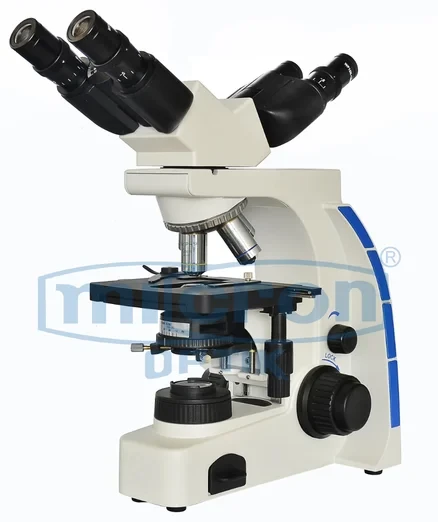
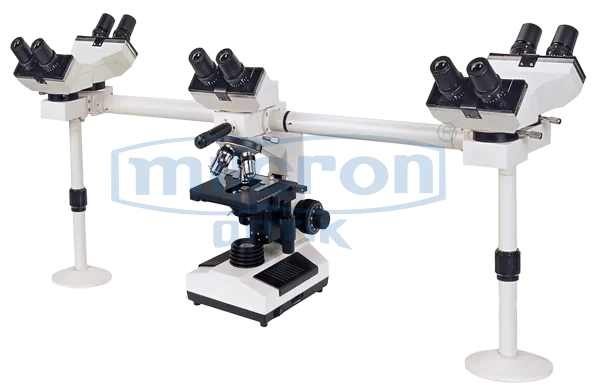
A Multi-View Microscope is specifically designed for teaching environments where multiple students need to observe the same slide at the same time. Micron's multi-view systems eliminate the need for multiple scopes, allowing a group to share a single, well-prepared specimen. These systems are widely considered the best for medical residency training and histology workshops.
The microscope features one main viewing head (usually binocular) for the instructor, and several additional heads (usually monocular) for the students. All heads are connected via a precision prism system that splits the light without degrading image quality. Rated as top rated equipment for nursing schools, it ensures all students see exactly what the instructor sees. An LED pointer allows the teacher to guide the students' attention to specific mitotic figures or artifacts on the slide.
Micron's multi-view microscopes are built on heavy-duty stands to prevent vibration, which is crucial when multiple people are touching the table or the scope. The focusing controls are typically locked to the main head, preventing students from accidentally knocking the specimen out of focus. For classroom management, this centralized control is the best feature. The objectives are parfocal and parcentered, ensuring the field of view remains consistent across all viewing heads.
These microscopes are often used in pathology labs for "scope side" sessions where a senior pathologist reviews difficult cases with junior residents. The ability to discuss specific cellular features in real-time accelerates the learning curve. That is why Micron is a top rated provider for teaching hospitals and universities. The ergonomic design ensures that even hours of group viewing do not lead to significant fatigue.
Investing in a Micron Multi-View Microscope enhances the efficiency of group learning and diagnostic collaboration. It is the best choice for any institution serious about team-based microscopy education. By facilitating shared viewing, it fosters discussion and consensus, leading to a deeper understanding of complex morphological presentations.


 SURGICAL MICROSCOPES